10 Reflections on the First Year of My Handcrafted Spoon Business | Spoonweather
Lessons on handmade work, repetition, presence, value, and building a small craft business with intention and joy.
BACKGROUND & HISTORY
12/29/20257 min read
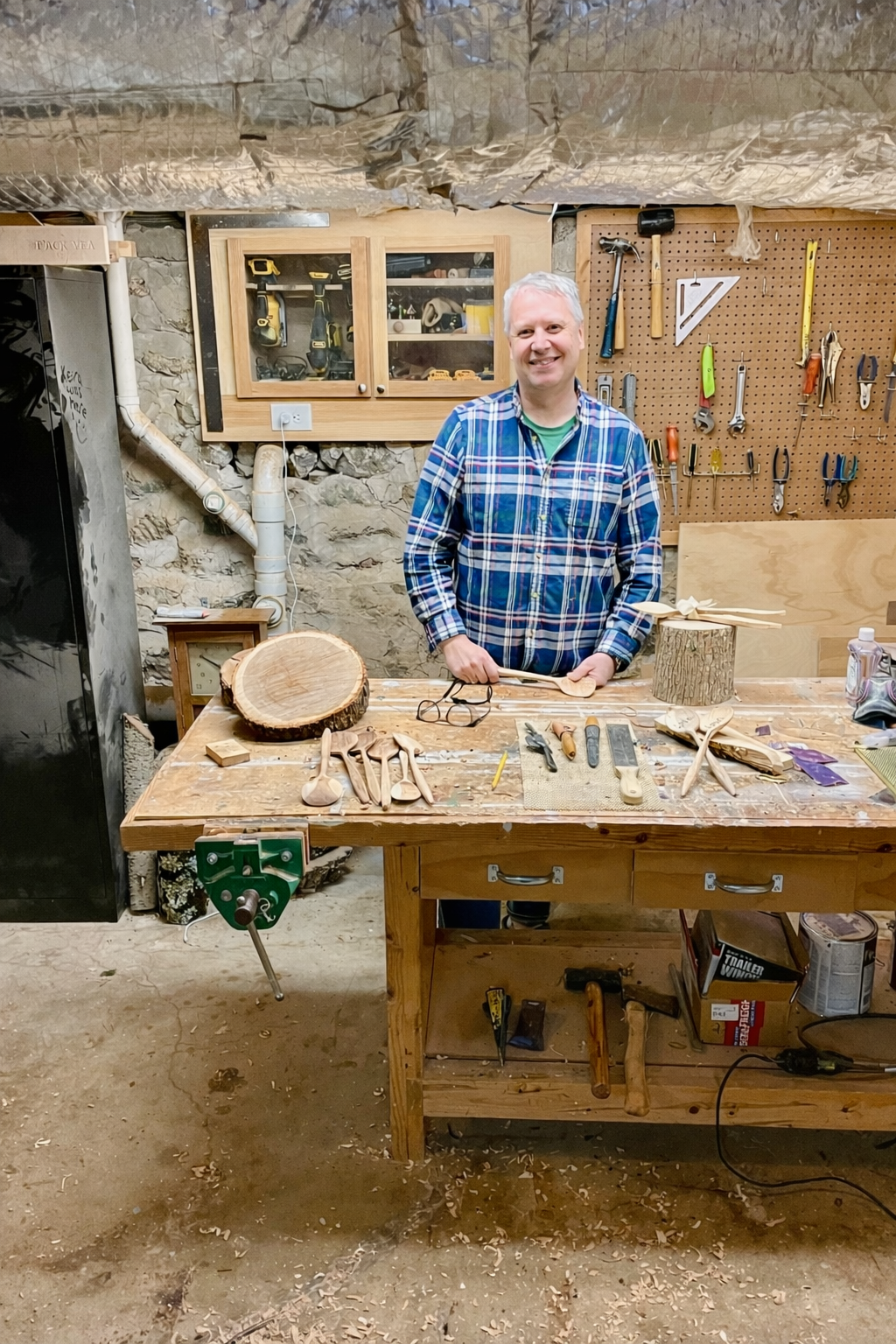
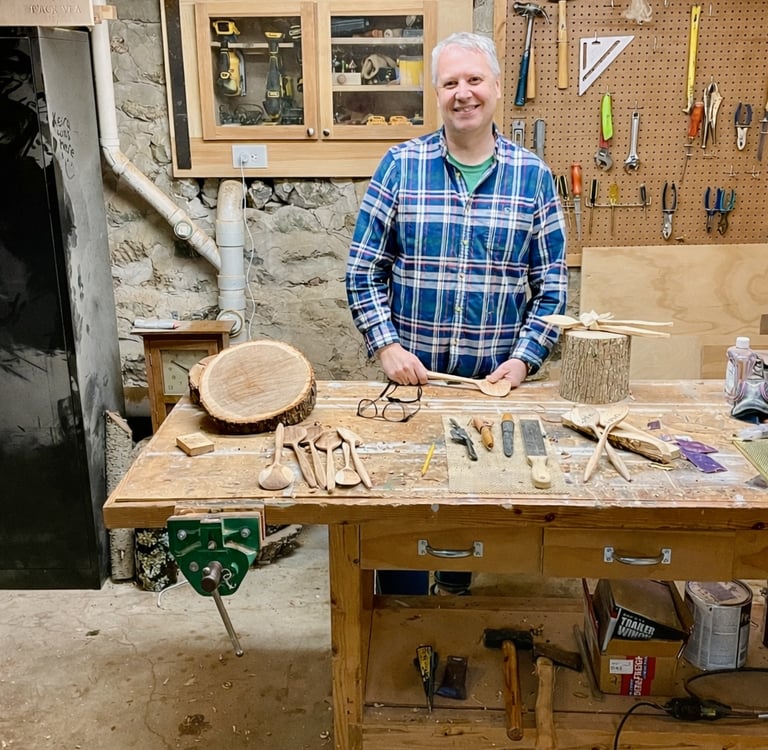
When I started Spoonweather at the start of this year, I didn’t have a clear picture of what it would become. I knew I loved carving spoons and wanted to carve more. I knew I wanted to explore what it meant to start a small business. And I knew I wanted to lean into work that felt tangible, grounded, and real.
What I didn’t anticipate was how much this first year would reshape the way I think—not just about business, but about time, value, creativity, and connection.
Spoonweather has been a meaningful and rewarding experiment. A chance to build new skills while doing something I genuinely love. A way to see what happens when you place something handmade into the world and let it find the people it’s meant for.
As the year winds down, I’ve been (trying) to slow down and reflect on what this experience has taught me. I am a strong believer that taking time to reflect is how we notice the lessons hidden in the work—how growth takes shape over time. So here goes—ten things I learned about myself and the world along the way this year:
1. It's always about relationships
I expected to enjoy carving spoons. I didn’t fully expect how much I’d enjoy the people. Whether it’s conversations at farmers markets, messages exchanged on Instagram with other makers, or long email threads around a custom commission, connection has been the most energizing and rewarding part of the journey—even for a fairly introverted person like myself.
Custom projects—like the ones I create through personalized spoon commissions—have become my favorite because they are deeply collaborative. Someone brings a story, a memory, or an idea, and together we brainstorm and shape it into something tangible and meaningful. In the end, it’s less about the object itself and more about the exchange. It's the shared creativity and connection where the real magic happens.
2. Even a simple cooking spoon can carry deep meaning
Before this year, I mostly thought of spoons as ordinary tools and something satisfying to carve from a piece of wood. I was focused on the "what" and the "how." A year into this journey, I have a much deeper appreciation for how much meaning they can carry and I now draw most of my satisfaction from the "why." I’ve watched people tear up talking about a spoon they’re giving to their mom, and I’ve seen how even small, everyday objects can become deeply cherished.
It turns out that something as simple as a spoon can hold layers of care and love. Knowing that a hand-carved cooking spoon might become part of someone’s daily rhythm—or woven into family life over time—has completely changed how I approach making them. As I sit carving, it brings me quiet joy to imagine the life this object might live in someone else’s hands.
3. When you give something to the world, the world gives back (and then some)
Over the course of the year, I tried to make room for generosity—giving away spoons now and then, sharing profits with charities, and going a little further when it felt right. None of it was done with expectations. And what came back wasn’t always tangible, but it often showed up tenfold as kindness, encouragement, conversations that lingered, and returning friendly faces.
I’ve come to think of these as small “investments in the universe,” not in any grand sense, but in the same way carving works. You put care into the work without knowing exactly where it will end up or how it will be received. You focus on making the next cut well. Over time, those small choices add up into something greater than the sum of the parts. This year reminded me that business, like craft, doesn’t have to be transactional to be sustainable and rewarding—it can grow quietly, shaped by trust, patience, and showing up with good intentions and faith in the goodness of others.
4. Spoon carving teaches presence
I often say carving spoons is my version of knitting. It slows me down. When I’m carving, my hands are busy, my attention is focused, and my mind quiets. The grain demands patience. The knife demands respect.
There’s something powerful and primal about working with your hands and letting the task steer your thoughts instead of the other way around. In a world that constantly pulls us toward distraction, carving has become a way for me to practice being present, intentional, and centered.
5. Making art and sharing it is vulnerable
I don’t think I ever truly appreciated what artists experience when they put something into the world that they’ve poured time, energy, and soul into. Every spoon represents hours of focus and a series of decisions—some confident, some uncertain.
Pricing that work. Displaying it. Watching how people react. All of it is humbling. There’s vulnerability in asking someone to value something you made with your heart and your hands. That experience has given me a new respect for artists of all kinds who take that risk again and again and lean on their art as their way to show up in the world.
6. Hand-crafted work is deeply undervalued
Selling face-to-face has been eye-opening. I’ve had conversations where someone hesitates to buy a handmade spoon they’ll likely use every day for years because it feels expensive—yet spending more than that on a single meal out barely gives us pause.
We live in a mass-produced world where prices are low, but so is our connection to where things come from. A skill honed over years of practice, the care taken in a job done well, and the time invested in making something thoughtful are largely invisible to us as consumers. We tend to focus only on the finished “thing,” which appears effortlessly—on a store shelf or on the screen in our hand—detached from how or where it came from. Coming face-to-face with that reality has been difficult at times, but it’s also fortified my belief that handcrafted work still matters. To me, craft reminds us that value isn’t just about price or utility; it’s about the uniquely human qualities of intention, skill, creativity, and the quiet beauty of work done with care.
7. Making connects effort to outcome in a rewarding way
I’ve spent most of my career in the corporate world, where work can sometimes feel abstract. Outcomes are indirect. Direct impact is sometimes hard to see. Carving spoons is the opposite.
I feel the labor in my hands (sometimes too much if you see how often I'm wearing a Band-Aid!). I see the result on the bench and shavings on the floor. The cause-and-effect is immediate and honest. That clarity has been deeply satisfying and has reshaped how I think about work, that value of time, and what it means to create something real.
8. There is value all around us—seeing it requires the right mindset
One of the quieter lessons this year has been learning to see value where others might not. A fallen log, often treated as a problem to be removed and discarded can become something useful, personal, and enduring.
From a single log, a whole collection of spoons can emerge. Watching that shift—from discarded to valued and cared for—never stops feeling a little magical to me. It’s a reminder of what can happen when we slow down and give our full attention to what (or who) is already in front of us.
9. Repetition is the real teacher
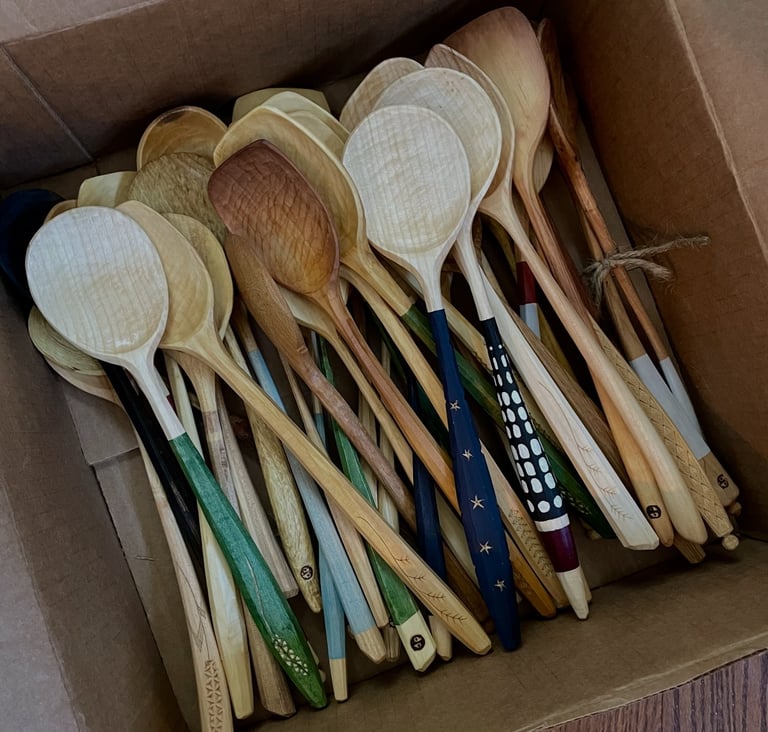
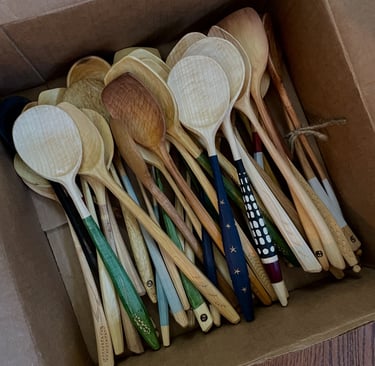
I am still far—far—from perfect (just ask my wife!). But after carving over 365 spoons this year, I can see improvement in a way that feels honest and earned. My proportions are better. My cuts are cleaner and more in tune with the grain. I carve more efficiently. I make fewer mistakes—and recover more gracefully when I do.
None of that came from a single breakthrough. It came from repetition. Spoon after spoon. Log after log. Some days felt clumsy. Others felt smooth. But the cycles count. Each repetition carries a small lesson forward, even when progress feels invisible in the moment.
This year has been a powerful reminder that all meaningful skills have learning curves—and that showing up consistently is what matters most.
10. Growth matters more than the destination
This year has reminded me that most worthwhile endeavors don't actually have a finish line. Spoonweather isn’t about “making it.” It’s about growing slowly, paying attention, and staying curious about where the work and this adventure might lead me.
I’m excited to keep leaning into commission work as a way to put more good into the world and connect with more wonderful people; to continue developing my Storm Drop series as a way of honoring the trees each spoon comes from; to meet more fellow spoon fanatics (and lovers of the idea of spoons); and to keep learning—about carving, storytelling, and how to run a small craft business with care, integrity, and joy.
Want to follow along with my journey? Click here to join my Email list!
With gratitude and a full heart
If this first year has taught me anything, it’s that making things with care, sharing them openly, and staying curious is a path worth following. If you’ve been part of this quirky experiment of mine—by bringing one of my spoons into your kitchen, caring for it with spoon butter, or simply following along—THANK YOU. Your support has meant more than you know.
Here’s to another year of spooning!
Spoonweather
Hand carved wooden spoons honoring local trees and community. Made in the USA .
© 2025. All rights reserved.
Learn more
Navigate
Connect


Needham, MA