What Are Analog Hobbies—and Why Spoon Carving Is a Great Choice
In a world of notifications and context-switching, analog hobbies offer something rare: the chance to focus on one thing all the way through. Here's why working with your hands matters more than ever.
BACKGROUND & HISTORY
1/26/20265 min read
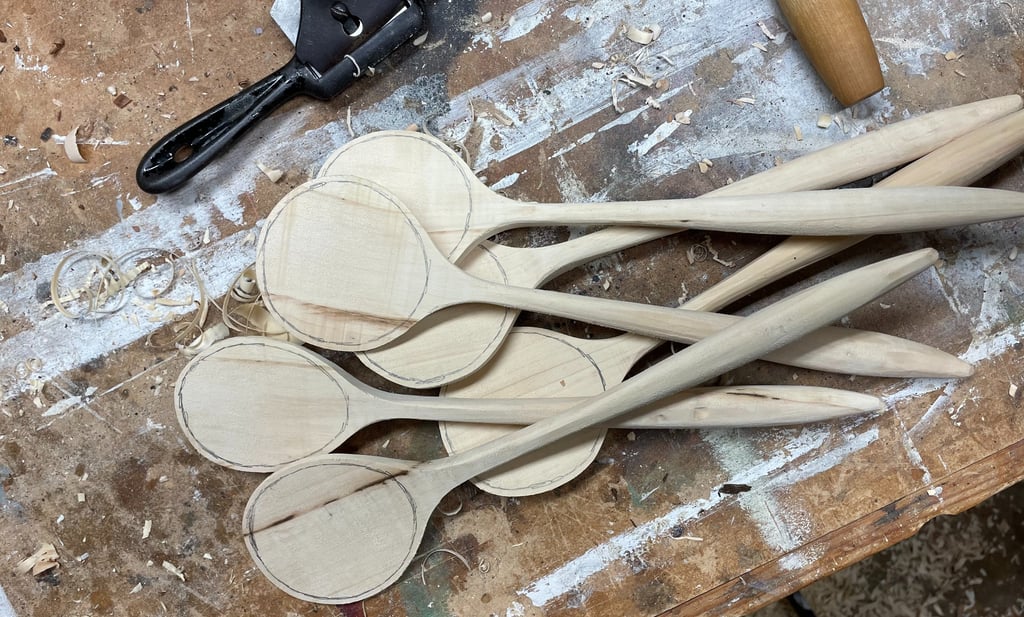
At no other point in history have so many people spent so little time doing one thing all the way through.
Our days are fractured into notifications, tabs, feeds, and alerts—each one tugging at our attention, each one asking us to switch gears just a little bit faster. We're productive, connected, and informed. And yet many of us feel restless, scattered, and tired in a way sleep doesn't fix.
This is where analog hobbies enter the picture.
For years, when people asked me why I carve spoons, I'd usually quip, "It's my version of knitting." Repetitive. Quiet. Something to do with my hands when my brain has had enough of the digital world. What I didn't realize at first is that this impulse isn't personal or quirky—it's deeply human.
Why Analog Hobbies Are Suddenly Everywhere
Analog hobbies are often described as “offline activities,” but that undersells what’s actually happening. These are activities that require your full attention and unfold in real time. The material responds to what you do. Wood resists the knife. Dough tightens. Thread slips if you rush it.
There’s no undo button. No copy-paste. No shortcut around paying attention.
As automation, AI, and digital abstraction accelerate, more people are realizing how rare it’s become to start something, stay with it, and finish it using only their hands and focus. That’s why woodworking, knitting, pottery, gardening, baking, and hand-tool crafts are popping up everywhere again—not as nostalgia, but as balance.
This broader shift overlaps with the values of the Slow Movement, but you don’t need a philosophy to feel the pull. When your hands are busy with something real, your mind naturally narrows its focus. The background noise fades. Time stretches a bit. You’re no longer multitasking your way through the day—you’re here and you're present.
How It Actually Feels
Here's what I notice when I switch from my laptop to a piece of wood: my shoulders drop first. Then my jaw unclenches. Within a few minutes, the mental static that's been humming in the background all day starts to quiet. My hands and fingers start to more of the thinking on their own.
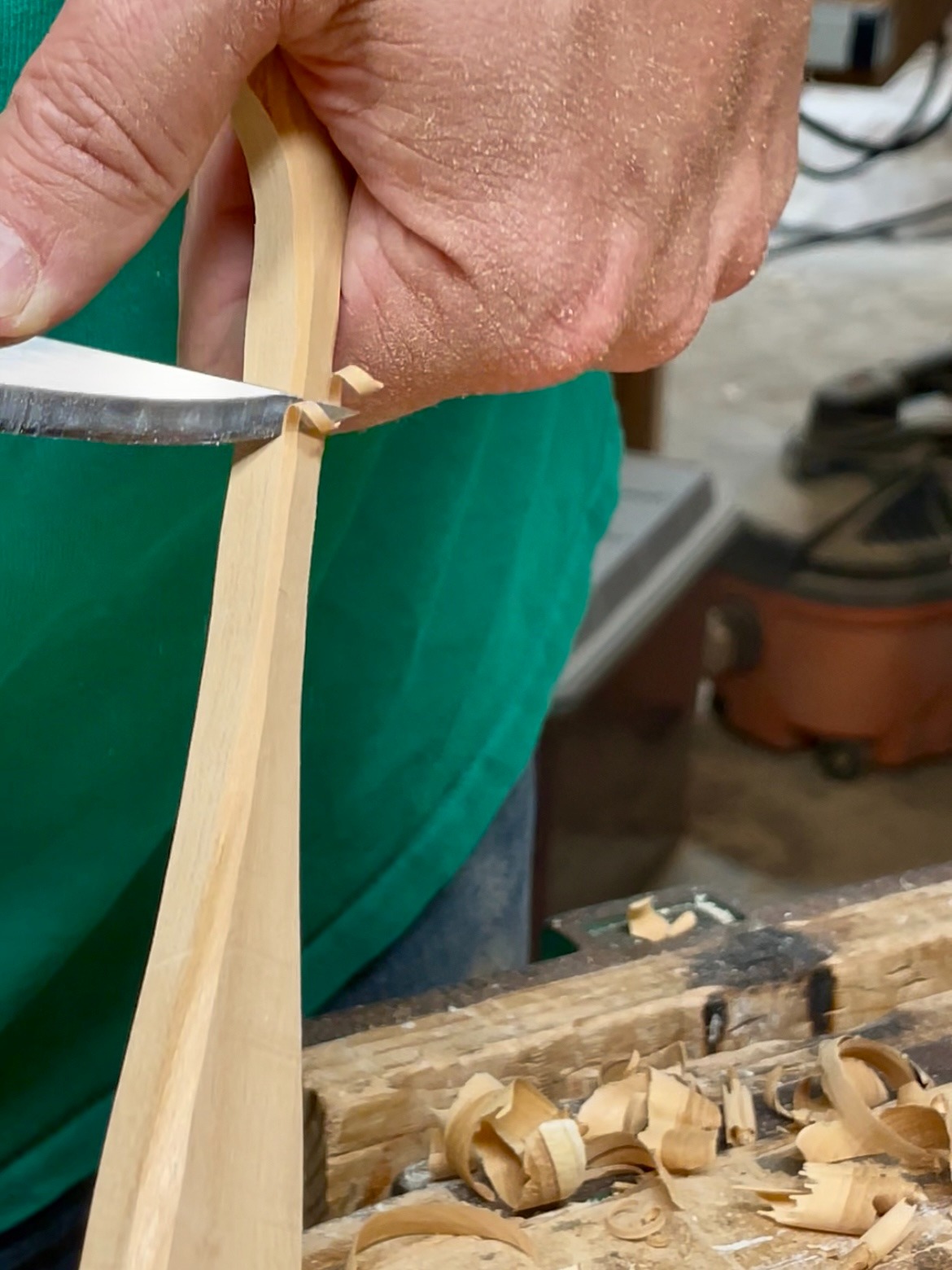
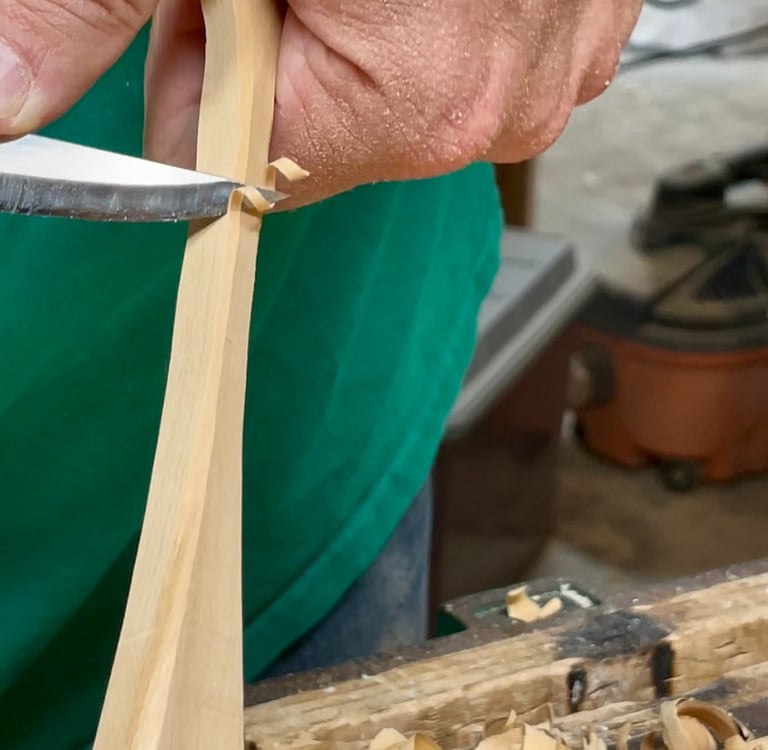
When I'm carving, every cut requires attention. Grain direction matters. Pressure matters. If my focus drifts, the knife gives immediate feedback—not as judgment, just information. That feedback loop pulls my awareness back into the present moment again and again. My nervous system isn't on edge anymore, waiting for the next ping or context switch. It's just here, following the curve of a spoon handle.
Research backs this up: sustained, single-task focus reduces cognitive fatigue and stress. When we bounce between tasks all day, our attention never fully lands. Analog hobbies quietly reverse that pattern by giving attention one clear place to go. They engage without overstimulating. They leave you tired in a good way.
Mindfulness, Flow, and Why Repetition Works
One of the most surprising things people discover when they pick up a hands-on hobby is how quickly their mind settles. Over time, this kind of focused work often leads to what psychologists call flow—a mental state where action and awareness line up, time feels different, and self-consciousness fades. The concept was popularized by Mihaly Csikszentmihalyi, and it shows up reliably in activities that balance challenge and skill.
This is also why repetition helps rather than hurts. Repeating motions—like carving curves or knitting stitches—creates rhythm. Rhythm steadies the nervous system. Instead of boredom, you get calm focus. Instead of distraction, you get momentum.
Why Working With Your Hands Feels So Deeply Familiar
There's another reason analog hobbies resonate so strongly, and it has nothing to do with trends.
Humans evolved as makers. For most of our history, daily life involved shaping materials into tools, shelter, and utensils. Our brains developed alongside wood, stone, fiber, and fire. Using our hands wasn't a leisure activity—it was how we survived, learned, and passed knowledge from one generation to the next.
That history still lives in us. When creativity exists only in smooth, consequence-free digital spaces, something important gets skipped. There's no resistance, no patience required, no real cost to inattention. Working with physical materials brings those lessons back naturally. You slow down because you have to. You focus because it matters.
This understanding sits at the heart of Sloyd, a Scandinavian educational philosophy developed in the 19th century that emphasized learning through handcraft—especially woodworking. Sloyd wasn't about producing professional craftspeople; it was about developing patience, attention, self-reliance, and character by making simple, useful objects with care. The practice recognized something we're only now rediscovering: that working with our hands shapes not just objects, but ourselves. I've written more about that tradition and why it still matters here:
👉 Slöjd: I think the Swedes got it right
That's why so many parents—myself included—encourage kids to have something they do with their hands. Not to turn them into craftspeople, but to give them an anchor. A way to experience effort, patience, and follow-through in a world that rarely demands any of those things.
Why Spoon Carving, Specifically, Works So Well
Among analog hobbies, spoon carving is especially approachable. You don’t need a studio, electricity, or elaborate equipment. A sharp knife, a piece of green wood, and time are enough. It fits easily into everyday life—at a bench, on a porch, or at the kitchen table.
It’s also deeply functional. A spoon doesn’t sit on a shelf—it gets used. Stirring soup. Serving rice. Scraping the last bit of sauce from a pan. That usefulness creates an ongoing relationship between maker, object, and moment.
Even if you never carve one yourself, using well-made wooden spoons carries some of that same grounded feeling. Many people find themselves instinctively reaching for a favorite spoon because it simply feels right in the hand. Caring for those tools—washing by hand, re-oiling, letting them age—becomes a small daily ritual that reinforces attention and care.
Imperfection, Presence, and Why This Matters Now
In a world full of polished, optimized outputs, analog hobbies remind us that imperfection isn’t failure—it’s proof. Tool marks, subtle asymmetry, and variation show that a human was paying attention. Handmade objects feel different because they are different. They carry the memory of focus within them.
As we head into 2026, analog hobbies aren’t a retreat from the future—they’re a way of staying human inside it. They offer focus in a distracted world, presence in a hurried one, and meaning in places we’ve stopped looking.
What would it feel like to bring one truly analog habit into your life this year?
If you're interested in exploring these ideas more deeply, here are a few topics that have shaped my thinking:
Flow: The Psychology of Optimal Experience by Mihaly Csikszentmihalyi — The foundational work on flow states and how we find meaning through focused attention.
Shop Class as Soulcraft by Matthew B. Crawford — A philosophical exploration of why working with our hands matters in an age of knowledge work.
The Craftsman by Richard Sennett — A deep dive into the relationship between hand and head, skill and expression.
Deep Work by Cal Newport — Practical strategies for cultivating sustained focus in a distracted world.


Further Reading:
Spoonweather
Hand carved wooden spoons honoring local trees and community. Made in the USA .
© 2025. All rights reserved.
Learn more
Navigate
Connect


Needham, MA